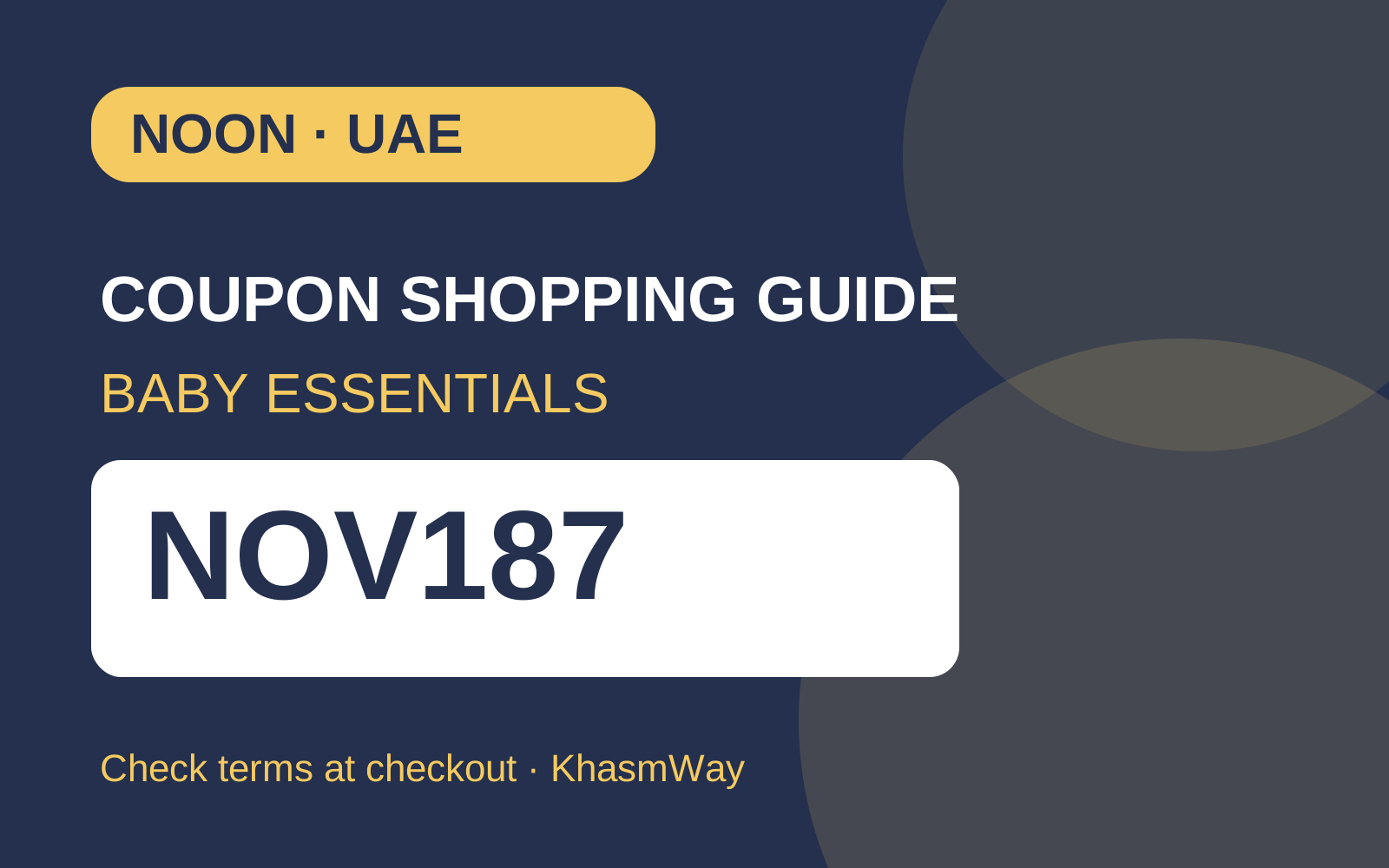
Noon UAE coupon NOV187 2026-11-07: Baby Essentials for frequent use — Evaluating alternatives
This independent guide does not guarantee a discount. Check code NOV187 and eligibility in the Noon cart.
Choosing baby essentials for frequent daily use requires balancing structural durability, maintenance overhead, and environmental performance against lifestyle constraints such as indoor-outdoor temperature shifts, urban mobility, and residential space. High-frequency items—specifically strollers, car seats, feeding systems, and nursery sleep stations—undergo hundreds of operational cycles monthly. Prioritizing modular designs with robust mechanical linkages, heat-dissipating textiles, and standardized safety compliance reduces total ownership friction compared to budget alternatives that degrade rapidly under mechanical stress and environmental exposure.
Evaluating alternatives effectively demands an objective assessment of material longevity, cleaning complexity, and cross-compatibility rather than relying solely on surface features. Premium engineered polymers, anodized aluminum frames, removable washable textiles, and standardized mounting interfaces (such as ISOFIX anchors or universal bottle threads) offer superior operational efficiency over extended multi-year periods. While higher initial investments may seem substantial, their lower replacement rates, enhanced safety retention, and superior resale or hand-me-down utility offset the upfront expenditure, making structural integrity and ergonomic flexibility the primary criteria for daily-use gear.
Environmental and Lifestyle Considerations for UAE Caregivers
Operating baby gear within the United Arab Emirates presents distinct environmental challenges that directly impact material degradation and daily usability. The regional climate features intense solar radiation, ambient summer temperatures exceeding 45 degrees Celsius, high relative humidity along coastal zones, and fine particulate atmospheric dust. Simultaneously, lifestyle patterns involve frequent transitions between air-conditioned indoor spaces and extreme outdoor ambient conditions. Gear left inside parked vehicles experiences thermal soak, elevating interior temperatures significantly above ambient levels, which can accelerate the off-gassing of volatile compounds in low-grade plastics and weaken structural adhesives over time.
Caregivers living in urban apartment towers or gated villa communities encounter distinct logistical requirements. High-rise living demands equipment that navigates narrow elevator doorways, tight apartment hallways, and polished ceramic tile flooring smoothly. Villa environments may involve frequent loading into vehicle trunks, outdoor patio navigation, and storage within unconditioned garages. Selecting baby gear for this environment mandates materials with high thermal stability, UV resistance, and dust-sealed mechanical joints to ensure smooth operation across multi-year lifespans without premature mechanical binding or textile discoloration.
Strollers and Urban Mobility Systems
Strollers represent one of the highest-frequency equipment investments, serving as primary transportation for urban commutes, commercial center navigation, and outdoor recreational walking. Evaluating stroller alternatives requires assessing frame geometry, wheel architecture, folding dynamics, and thermal regulation capabilities.
Full-Size Modular Strollers vs. Ultra-Compact Cabin Travelers
Full-size modular strollers offer convertible chassis systems capable of accepting bassinet attachments, infant car seats, and reversible toddler seats. These platforms prioritize infant ergonomics, offering flat recline positions, structural side protection, and robust multi-wheel suspension. However, their larger physical footprint and heavier mass (typically 10 to 14 kilograms) present storage challenges in smaller vehicles and tight urban residences. Modular systems excel when primary usage involves extended daily walking, smooth terrain absorption, and long duration outings where sleeping comfort is paramount.
Ultra-compact cabin travelers prioritize minimal weight (typically 5 to 7.5 kilograms) and a low-volume fold designed to meet international airline overhead compartment dimensions. While highly advantageous for frequent regional travel and short errands, compact strollers compromise on wheel diameter, suspension travel, sub-seat storage capacity, and structural rigidity. Frequent use over rough paved surfaces or sand-dusted pathways can induce frame flex and wheel vibration. Caregivers must balance the convenience of one-handed rapid folding against the long-term ergonomic support required for extended daily sitting.
Wheel Architecture, Suspension, and Terrain Handling
The operational longevity of a stroller relies heavily on its wheel composition and bearing assemblies:
- Plastic EVA (Ethylene-Vinyl Acetate) Foam Wheels: Lightweight and puncture-proof, but prone to embedding sharp gravel and wearing down rapidly on abrasive outdoor surfaces, leading to reduced traction and noisy operation over time.
- PU (Polyurethane) Tires: Offer superior wear resistance, shock absorption, and rubber-like grip without the risk of deflation, making them ideal for mixed indoor-outdoor use.
- Pneumatic (Air-Filled) Rubber Tires: Provide maximum terrain absorption over uneven outdoor surfaces, but require ongoing pressure maintenance and carry a risk of puncture.
Sealed ball bearings are essential for preventing fine sand and dust intrusion into wheel hubs. Exposed sleeve bearings quickly bind when exposed to fine desert dust, increasing roll resistance and requiring frequent disassembly for cleaning. Independent four-wheel suspension featuring steel coil springs or elastomer dampers mitigates micro-vibrations transmitted to the infant's spinal column, particularly over textured pavers or tiled floors.
Canopy Engineering, Ventilation, and Fabric Specifications
Solar radiation protection is critical for frequent daytime use. High-performance stroller canopies feature multi-segment extendable panels rated at UPF 50+ solar protection. The inclusion of magnetic-closure mesh viewing windows facilitates continuous airflow while allowing caregivers to monitor the child without noisy hook-and-loop fasteners that disrupt sleep.
Textile selection impacts both thermal comfort and cleaning maintenance. Solution-dyed polyester weaves with 300D to 600D (denier) ratings balance tear strength with water and stain resistance. Light-colored fabrics reduce heat absorption during direct sun exposure, though they may require more frequent spot cleaning compared to darker tones. Removable, machine-washable seat pads with moisture-wicking bamboo-derived or technical mesh linings prevent moisture accumulation against the infant's skin during high-humidity conditions.

Car Seat Systems and Automotive Safety
Selecting an automotive restraint system requires evaluating safety standards, physical vehicle compatibility, energy-absorbing materials, and thermal performance inside closed car cabins.
i-Size (ECE R129) vs. FMVSS 213 Regulatory Frameworks
Car seats sold in the market generally align with European (ECE R129 / i-Size) or American (FMVSS 213) safety standards. The ECE R129 standard mandates rear-facing travel up to a minimum of 15 months, utilizes child height rather than mass for seat categorization, incorporates mandatory side-impact dynamic testing, and requires ISOFIX rigid attachment to minimize installation errors.
American FMVSS 213 standards often allow rear-facing travel based on weight thresholds and permit flexible LATCH belt attachments alongside vehicle seatbelt installations. Systems tested to i-Size standards generally provide more standardized geometric fitment across modern vehicles equipped with ISOFIX anchor points, reducing seat instability caused by variable vehicle seat contours.
Energy-Absorbing Materials: EPS vs. EPP vs. Memory Foam
The structural shell of a car seat relies on specialized foams to absorb kinetic energy during deceleration:
| Material Type | Energy Absorption | Durability & Heat Resistance | Flexibility / Comfort |
|---|---|---|---|
| EPS (Expanded Polystyrene) | High single-impact energy dissipation | Rigid; can crack under heavy stress or rough handling | Rigid structure requiring thick textile padding |
| EPP (Expanded Polypropylene) | High multi-impact capability; does not fracture easily | Superior thermal stability; resistant to degradation | Slightly flexible; offers high structural integrity |
| Viscoelastic Memory Foam | Localized impact dampening and pressure distribution | Responds to body heat; can retain heat in warm climates | High ergonomic contouring for infant comfort |
Selecting seats incorporating EPP foam within side wings and headrests provides long-term durability, as EPP resists cracking during frequent seat transfers between vehicles or accidental drops.
Thermal Management and Fabric Breathability in Vehicles
Vehicle interiors parked outdoors absorb extreme radiant heat. Buckles, chest clips, and synthetic seat covers retain thermal energy, posing discomfort or burn risks to delicate skin. Advanced car seat designs utilize heat-dissipating shell designs with integrated ventilation channels that allow passive air movement behind the backrest. Fabrics incorporating 3D spacer mesh structure facilitate convective cooling, preventing sweat accumulation and reducing thermal distress during extended drives.
Infant Feeding and Hygiene Sterilization Equipment
Daily feeding routines involve repetitive cycles of thermal shock, mechanical washing, chemical exposure from dishwashing detergents, and high-temperature sterilization. Selecting durable, non-toxic materials ensures chemical stability and ergonomic ease.
Bottle Material Comparison: Glass, Polypropylene, and Polyphenylsulfone
Infant feeding bottles are subjected to high thermal and mechanical stress. The primary material options present specific trade-offs:
- Borosilicate Glass: Completely chemically inert, scratch-resistant, and immune to odor or color absorption. It withstands rapid thermal transitions without leaching. However, glass increases total weight, posing hand fatigue during night feedings and presenting break risks if dropped on hard stone or tiled kitchen floors.
- Polypropylene (PP): Lightweight, impact-resistant, and cost-effective. However, PP is soft and susceptible to surface micro-scratches from cleaning brushes, which can harbour bacterial biofilm. It also degrades faster under repeated heat sterilization cycles, becoming cloudy over time.
- Polyphenylsulfone (PPSU): A medical-grade thermoplastic combining the lightweight, shatterproof properties of plastic with near-glass thermal resistance. PPSU withstands continuous sterilization cycles up to 208 degrees Celsius without material breakdown, structural warping, or micro-scratch accumulation, offering an optimal balance for frequent, long-term use.
Sterilization Methodologies: Steam, UV, and Microwave Alternatives
Sterilization mitigates bacterial growth on bottle surfaces, teats, and breast pump components. Evaluating sterilization options requires assessing throughput, cycle time, and energy efficiency:
Electric steam sterilizers utilize boiling water to generate high-temperature vapor, achieving broad-spectrum disinfection within 6 to 12 minutes. While highly effective, steam systems leave components wet, requiring integrated HEPA-filtered hot air drying modules to prevent secondary microbial growth on moist surfaces. Steam units also require regular descaling to remove mineral buildup caused by water hardness.
UV-C LED sterilizers use ultraviolet radiation (typically 254nm to 280nm wavelength) to disrupt microbial DNA without heat or moisture. UV systems operate dry, eliminating the need for descaling and allowing the safe sterilization of non-boilable electronic accessories, toys, and mobile devices. However, UV radiation requires direct line-of-sight exposure to kill pathogens; shaded internal crevices of complex valve assemblies or opaque components may not receive sufficient exposure unless carefully positioned.
Maintenance and Component Longevity under Local Water Conditions
Desalinated municipal water contains specific mineral concentrations that leave scale deposits on heating elements in steam sterilizers, bottle warmers, and electric kettles. Mineral accumulation reduces heating efficiency, increases cycle times, and can cause heating element burnouts. Utilizing low-mineral distilled or purified water for steam appliances prolongs heating element lifespans. Teats and silicone valves require routine inspection for tear propagation and elasticity loss induced by daily boiling cycles, replacing silicone elements every 2 to 3 months for optimal flow rate compliance and hygiene standards.
Sleep Solutions: Bassinets, Co-Sleepers, and Convertible Cribs
Creating a safe, comfortable, and ergonomically correct sleep space requires selecting sleep platforms that strictly conform to safe-sleep standards (such as EN 1130 or ASTM F2194) while fitting the physical room layout.
Structural Integrity: Solid Wood vs. Engineered Timber and Mesh Systems
Nursery sleep structures must sustain continuous static and dynamic loads without structural loosening over time. Solid hardwoods (such as beech, birch, or solid oak) provide high structural rigidity, screw-thread retention, and resistance to structural warping. Solid wood cribs withstand multiple reassembly cycles when moving rooms or reconfiguring for growing children.
Engineered wood (MDF or particleboard) reduces initial cost but exhibits lower moisture resistance and degrades faster around joint connections after repeated assembly. Fabric-sided bedside co-sleepers using anodized aluminum or steel tube frames offer lightweight portability and foldability. They utilize drop-side mechanisms to attach to adult bed frames, providing immediate access for nocturnal nursing. However, fabric co-sleepers have shorter usage lifespans (typically 0 to 6 months) compared to full-size cribs that convert into toddler beds.
Mattress Composition, Density, and Thermal Regulation
Infant mattresses must adhere to strict firmness standards to reduce safe-sleep risks. Soft mattresses present suffocation hazards for infants who cannot independently roll over or lift their heads. Key composition options include:
- High-Density Polyurethane Foam: Offers light weight and uniform surface support. Requires open-cell structures or core ventilation channels to prevent heat accumulation under the infant's body.
- Pocket Spring Systems: Provide high breathability and structural longevity, supporting proper spinal alignment as child weight increases. Steel spring cores facilitate natural air convection within the mattress body.
- Polyester Fiber Core Matrix: Fully washable non-woven polymer fiber cores allow direct air passage through the mattress, maximizing breathability and permitting complete rinsing under running water if soiled.
Longevity and Transformation Mechanics
Convertible sleep systems (such as 3-in-1 or 4-in-1 crib designs) adapt from infant cribs to toddler beds and daybeds. Evaluating these systems requires examining conversion hardware quality. Metal-to-metal bolt sleeve inserts prevent thread stripping during conversions, whereas direct wood screw assembly weakens timber structures during disassembly. Long-term conversion utility requires storing conversion kits securely over multi-year spans to avoid component displacement.
Ergonomic Baby Carriers and Wearable Support
Wearable baby carriers provide hands-free mobility and close contact, but demand careful evaluation regarding parental spinal loading and infant hip geometry.
Mechanical Structure: Buckled Soft-Structured Carriers vs. Wraps vs. Hip Seats
Soft-structured carriers (SSCs) utilize dense padded waist belts, contoured shoulder straps, and quick-release buckles to distribute child weight across the wearer's hips and shoulders. SSCs offer rapid donning and wide adjustability between different caregivers. They accommodate infants from newborn stage (with inserts or adjustable base panels) up to early toddlerhood (up to 15-20 kilograms).
Stretchy and woven wraps consist of long fabric lengths wrapped around the torso. They provide custom contouring for small newborns, distributing weight across broad muscle groups. However, wraps require a learning curve to tie securely, and synthetic elastic wraps retain significant body heat, causing perspiration build-up during extended wear.
Hip seat carriers incorporate a firm, lightweight shelf (often EPP foam) resting on the caregiver's pelvis. They excel for older infants and toddlers who frequently request to be carried and set down. The rigid shelf elevates the child's mass, reducing lateral spinal flexion for the caregiver, but adds structural bulk around the waistline.
Hip Dysplasia Compliance and Lumbar Support Dynamics
Proper ergonomic carrying mandates that the infant's hips sit in the broad "M-position" (spread-squat position), where knees are positioned higher than the hips, and the thighs are fully supported to the knee joint. This geometry reduces mechanical stress on the underdeveloped hip socket (acetabulum), minimizing hip dysplasia risks as recognized by the International Hip Dysplasia Institute (IHDI).
Caregiver lumbar support pads distribute lower back compression loads across the sacral region. Dual-adjusting shoulder straps allow precise tensioning to pull the infant's center of gravity close to the wearer's torso, reducing forward lean and upper back muscle fatigue during prolonged use.
Fabric Heat Retention and Moisture Wicking
Carrying an infant generates substantial shared body heat. Carriers featuring 3D air mesh panels, lightweight linen blends, or technical moisture-wicking synthetic fabrics permit ambient air circulation between parent and child. Heavy cotton canvas or unventilated padded fabrics act as thermal insulators, rapidly causing heat discomfort in warm environments.

High Chairs and Weaning Furniture Systems
High chairs undergo intensive daily use during complimentary feeding, requiring high structural stability, rapid surface sanitation, and multi-stage adjustability.
Adjustable Wooden Chairs vs. Folding Plastic Systems
Adjustable wooden high chairs (often constructed from solid beech wood) utilize adjustable seat and footrest slots to maintain proper 90-degree hip, knee, and ankle angles across childhood development. These non-folding chairs integrate into standard dining tables, promoting family mealtime interaction. Their smooth finished timber surfaces wipe down easily and resist long-term mechanical wear, functioning across multiple childhood stages up to adult weight capacities.
Plastic folding high chairs offer integrated tray options, multi-position backrest reclines, and compact folding mechanisms for storage. While convenient for tight spaces, their complex folding hinges, fabric seams, and hidden crevices can trap food debris, requiring extensive detailing to maintain hygienic standards. Plastic frames may also present larger floor footprints due to wide angled support legs needed for stability.
Harness Hygiene, Tray Mechanics, and Crevicular Cleaning
Food residue accumulates rapidly in harness straps, buckle receivers, and tray attachment slots. Evaluating high chairs involves assessing hygiene maintenance:
- Removable Harness Straps: Harnesses that unthread quickly without tools facilitate frequent machine washing or deep soaking to eliminate organic food buildup.
- Dishwasher-Safe Tray Overlays: Snap-on plastic tray covers allow quick removal for high-temperature machine sanitation, preventing grease film buildup.
- Sealed Seat Surfaces: Smooth polyurethane leatherette or molded solid plastic seats with minimal stitching eliminate food entrapment zones compared to plush fabric seat pads.
Structural Stability Footprints in Compact Living Spaces
High chair base footprints vary considerably. Wide A-frame bases provide structural anti-tip safety when toddlers push off dining table edges, but present tripping hazards in narrow kitchen walkways. Straight-leg wooden designs or weighted pedestal bases reduce floor footprint while maintaining tipping stability, optimizing flow within compact urban floor plans.
Comprehensive Feature and Performance Decision Matrix
The matrix below provides a comparative analysis of key baby essential categories across physical, operational, and environmental parameters for high-frequency use:
| Category | Primary Material Options | Durability Rating | Maintenance & Cleaning Complexity | Climate Suitability | Typical Usage Lifespan |
|---|---|---|---|---|---|
| Strollers (Modular) | Anodized Aluminum Frame, PU Tires, 600D Polyester | High | Moderate (Removable textiles, wheel bearing maintenance) | High (Requires UPF 50+ canopy & mesh ventilation) | 0 to 4 Years |
| Strollers (Compact Travel) | Lightweight Alloy, EVA Foam Wheels, Ripstop Nylon | Moderate | Low (Simple surface wiping, minimal removable parts) | Moderate (Smaller canopies, reduced ventilation space) | 6 Months to 3 Years |
| Car Seats (i-Size) | EPP Structural Foam, Polycarbonate Shell, 3D Mesh | Very High | High (Harness stripping, cover removal, shell vacuuming) | High (Requires active passive-airflow channels) | 0 to 7+ Years (System dependent) |
| Feeding Bottles | Polyphenylsulfone (PPSU) or Borosilicate Glass | Very High | Low (Dishwasher safe, minimal degradation under sterilization) | High (Unaffected by ambient temperatures) | 1 to 2 Years (Teats replaced quarterly) |
| Electric UV Sterilizers | 304 Stainless Steel Interior, ABS Exterior Shell | High | Very Low (Dry process; no descaling required) | High (Operates indoors without steam humidity) | 2 to 5 Years |
| Nursery Cribs | Solid European Beechwood, Non-Toxic Varnish | Very High | Low (Wipe-down frame, periodic mattress vacuuming) | High (Solid wood resists warping in ambient AC) | 0 to 5 Years (With toddler conversion) |
| Baby Carriers | Structure Mesh, Linen Blends, Heavy-Duty Buckles | High | Moderate (Machine washable, air drying required) | High (Mesh panels essential for thermal relief) | 0 to 3 Years |
| High Chairs | Solid Timber or Molded Polypropylene / Steel Tubing | High | High (Daily wipe-downs, harness washing, tray sanitation) | High (Impermeable to humidity and surface spills) | 6 Months to 5+ Years |

Pre-Purchase Compatibility and Dimensional Verification Checklist
Before purchasing high-frequency baby gear, complete the following physical compatibility checks to prevent operational friction in your home and vehicle:
- Vehicle Trunk & ISOFIX Verification:
- Measure vehicle boot dimensions (width, depth, height) and compare against stroller folded dimensions.
- Locate vehicle ISOFIX lower anchor points and check rear seat slope angles to ensure proper base alignment without steep tilt.
- Verify front passenger legroom clearance when installing rear-facing convertible car seats.
- Residential Access & Doorway Clearance:
- Measure elevator door entry clearance and internal cab dimensions in apartment buildings.
- Confirm main apartment/villa entrance door width exceeds stroller chassis width (standard strollers range from 58cm to 65cm).
- Check narrow interior hallway turning radii for smooth stroller movement.
- Nursery Footprint & Clearance:
- Confirm target crib layout leaves clear access for adult passage and bedside co-sleeper drop-side operation.
- Verify mattress support frame height aligns with adult bed mattress height for co-sleeping units.
- Electrical & Appliance Counter Space:
- Measure kitchen counter depth and overhead cabinet clearance for electric sterilizers and bottle warmers.
- Ensure proximity to grounded power outlets without extending cords near water sources or sink basins.
Logistics, Unboxing Inspection, and Return Protocol
Upon taking delivery of high-value, safety-critical baby equipment, perform a thorough inspection before discarding packaging materials or putting products into service.
Inspect outer transit cartons for severe crushing, puncture marks, or moisture ingress that could indicate internal structural damage. Open the packaging carefully, retaining all interior protective inserts, user manuals, and warranty registration paperwork. For car seats and strollers, visually examine the structural chassis for stress fractures, plastic discoloration, missing hardware rivets, or misaligned folding joints.
Test mechanical functions on a clean, soft surface indoors:
- Cycle stroller folding mechanisms multiple times to check for smooth latching and release.
- Verify car seat harness adjustment levers move freely and buckle latches engage with a clear tactile click.
- Ensure high chair trays slide smoothly along mounting tracks and locking pins engage securely.
- Inspect textile seams, zippers, and harness straps for loose stitching or frayed material under light tension.
Under United Arab Emirates consumer protection regulations, items returned due to change-of-mind or dimensional incompatibility typically require pristine, unused condition with all original packaging, tags, and accessories intact. Products categorized under hygiene items—such as breast pumps, opened feeding bottles, pacifiers, and unsealed mattress units—are generally exempt from return policies once opened, unless proved structurally defective upon arrival. Ensure physical dimensions and mechanical compatibility are verified prior to breaking sealed hygiene packaging.
Checkout Execution and Promotional Code Application
Finalizing an online purchase requires careful review of order summaries, shipping parameters, and available promotional entries. When ordering baby gear, follow a structured checkout workflow to ensure accurate order processing:
- Itemized Review: Confirm all selected variants (such as color options, frame finishes, adapter sets, or mattress dimensions) match target specifications in your cart.
- Address & Contact Detail Input: Enter complete regional delivery addresses, specifying building names, apartment numbers, street names, and active local mobile numbers to ensure smooth carrier navigation and delivery coordination.
- Promotional Code Entry: Locate the designated promotional or discount code input box within the checkout or payment summary screen. Enter the promo code NOV187 into the field exactly as provided. Apply the code and review the revised line-item breakdown to confirm successful code registration before finalizing payment details.
- Payment Selection: Select your preferred payment method (such as credit card, debit card, or local digital wallet option). Verify transaction amounts match the updated order total.
- Documentation Retention: Save digital invoice confirmations, order numbers, and email receipts to facilitate future warranty registration, customer service requests, or potential return logistics.
Frequently asked questions
Does code NOV187 guarantee savings?
No. Check the eligibility and actual discount in the Noon cart before paying.
How can I confirm the code is applied?
Enter the code at checkout and verify that a discount actually appears in the order summary.
Are coupon terms identical in both countries?
Not necessarily. Check the official store terms for your country.